Discovery
Discovery Room
Explore nature, sorting, observation, and the world around us.
Play in this room
See every game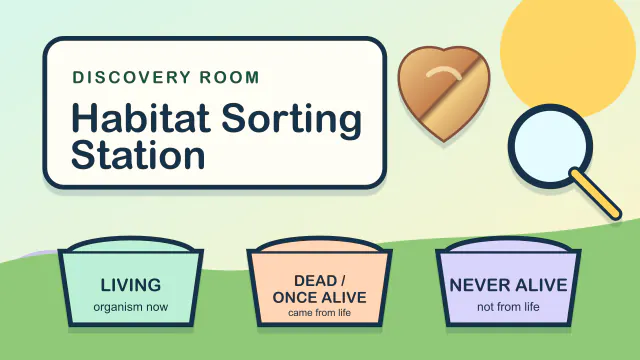
Discovery Room
Habitat Sorting Station
Practise classifying specified finds as living, dead / once alive, or never alive using organism and provenance evidence
Play now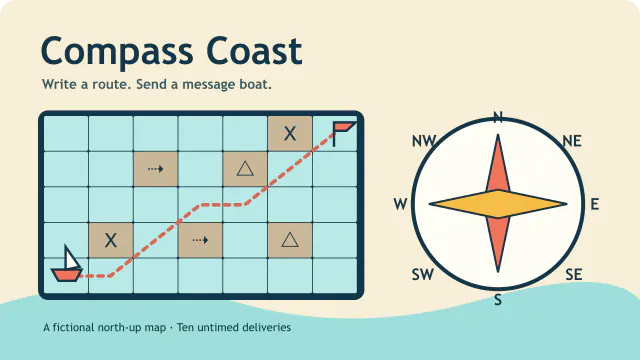
Discovery Room
Compass Coast
Follow and author routes using the eight compass labels and a map key
Play now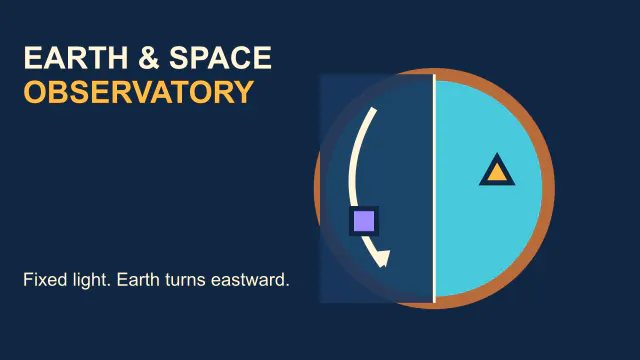
Discovery Room
Earth and Space Observatory
Practise explaining day, night and the Sun's apparent movement using Earth's eastward rotation on its axis
Play nowNo screen needed
Two complete activities to try
Use everyday materials. Adjust the challenge without changing the purpose.
Look closer
You need: One safe natural object, such as a leaf, stone, or shell.
- Look from the top, side, and underneath.
- Name its colours, shapes, parts, and texture.
- Draw one detail that was easy to miss at first.
Make it easier: Use sentence starters: “I notice…” and “I wonder…”.
Try more: Compare two objects and record two similarities and two differences.
Adult role: Check that the object is safe to handle and let uncertainty remain a real answer.
Material sorting lab
You need: Six safe household objects made from two or more materials.
- Look and feel without breaking anything.
- Sort by material or texture.
- Choose one object and explain the evidence for its group.
Make it easier: Begin with two groups, such as soft and hard.
Try more: Find an object that could fit two groups and defend both choices.
Adult role: Avoid sharp, hot, electrical, fragile, or very small objects.
Want a reusable version? Print six play prompt cards.